

Echoes
Ideas don’t end when a keynote does. They continue through the conversations they spark and the decisions they influence. Echoes brings together the talks, stories, and perspectives I’ve shared with audiences exploring AI, design, leadership, and the future of innovation.
The People Problem Behind AI Leadership | Re:Wire Podcast
Core Idea:
What if leading through AI is a people problem before it's a technology problem?
Key Takeaway:
Every team needs three skills for the AI era: fluency, judgment, and context. Leaders also need to recognize Deliberation Debt, the hidden cost of deciding faster than a question deserves.
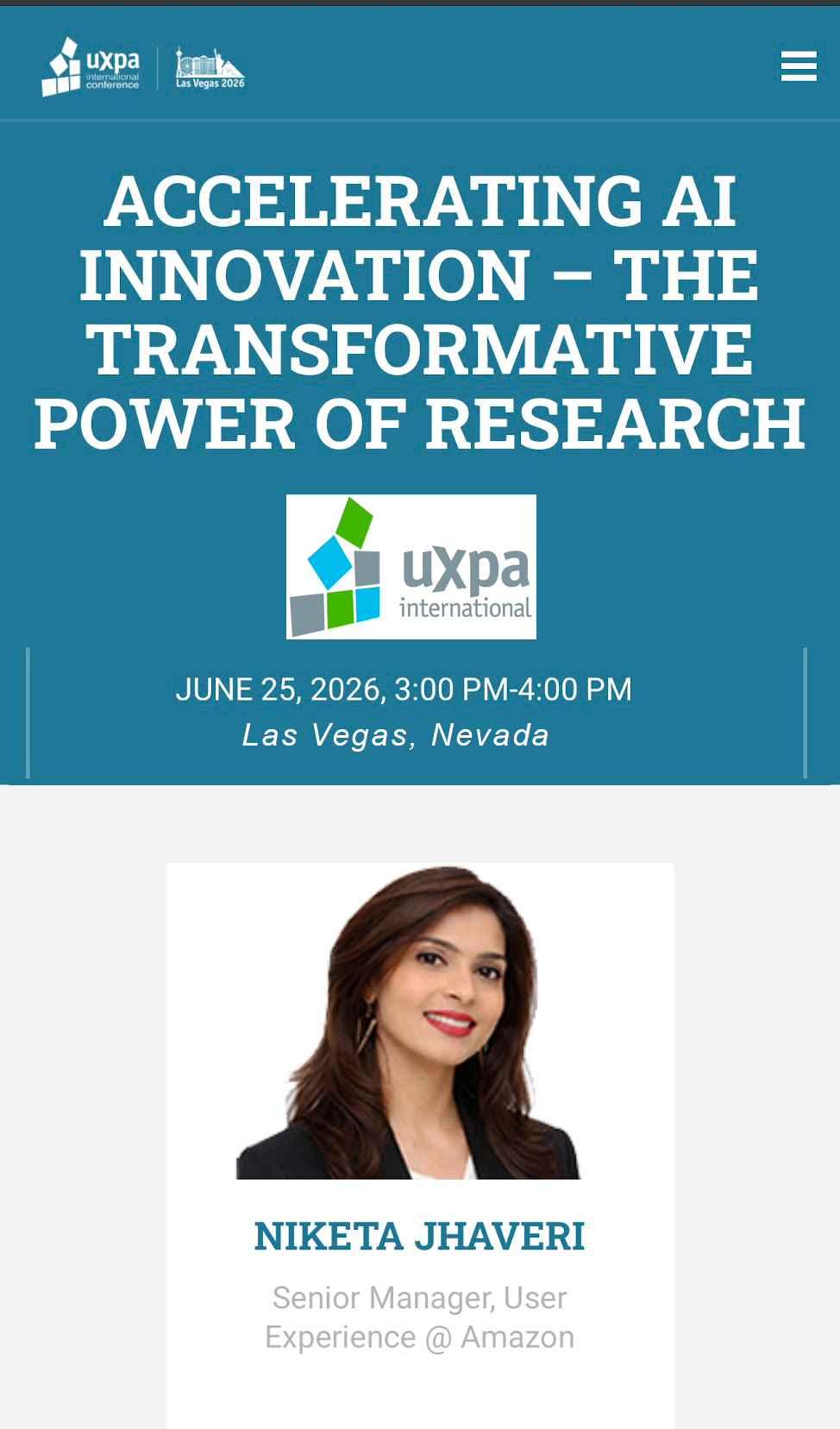
Accelerating AI Innovation at UXPA International
Core Idea:
What if research isn't slowing innovation, but accelerating the right innovations?
Key Takeaway:
The organizations that build AI fastest aren't the ones that skip research. They're the ones that transform human insight into confident, high quality decisions.
The Future of Design Is Not AI First. It Is Judgment First.
Core Idea
What if the most important design skill in the age of AI isn't knowing what to automate, but knowing what should stay human?
Key Takeaway
Not everything that can be delegated should be delegated. The teams that lead in AI will be the ones that decide, on purpose, where human judgment gives the work its meaning.

Invisible Decisions in the age of AI
Core Idea
The biggest decisions in AI aren't made by AI. They're made by the people who design it, lead it, and ultimately decide whether to trust it.
Key Takeaway
Every AI experience is shaped by three layers of invisible decisions:
Product | Leadership | Human
The organizations that recognize all three build AI people trust.

Accelerating AI Innovation at Quirk's Chicago.
Core Idea
Research did not get replaced by AI. It got repositioned. When synthesis becomes cheap and fast, the scarce thing is no longer producing insight, it is deciding what the insight means across nine different cultures and what to do about it. Your deck argues that AI collapsed the time between question and answer, and that collapse is exactly what raises the value of the researcher who can frame, interpret, and translate.
Key Takeaway
Method has always evolved with infrastructure. Manual, digital, cloud, now AI augmented. Each era changed the cost of asking a question, not the reason for asking it.
Scale exposes what was already fragile. Nine markets did not create the cultural nuance problem. It made an existing blind spot impossible to ignore.
Speed only matters if it lands before the decision. The old way did not fail because it was slow in the abstract. It failed because insights arrived after the window closed.
The output of modern research is frameworks, not reports. Conversation patterns, sentiment, pain points, localization. Reusable structures beat one time findings.
The measurable win was 40 percent faster synthesis cycles, 20 percent cost reduction, and 2x insights. The unmeasured win was researchers moving from documentation to direction.
The role ladder is the real story. Moving from tool proficiency to insight orchestration is a shift in identity, not in software.

Design Leadership in the age of AI
Leading with Clarity, Courage, and Chaos Taming
Core Idea:
What if the defining skill of AI leadership isn't controlling change, but helping people navigate it?
Key Takeaway:
Great AI leaders don't eliminate chaos. They transform it into clarity, confidence, and forward momentum.

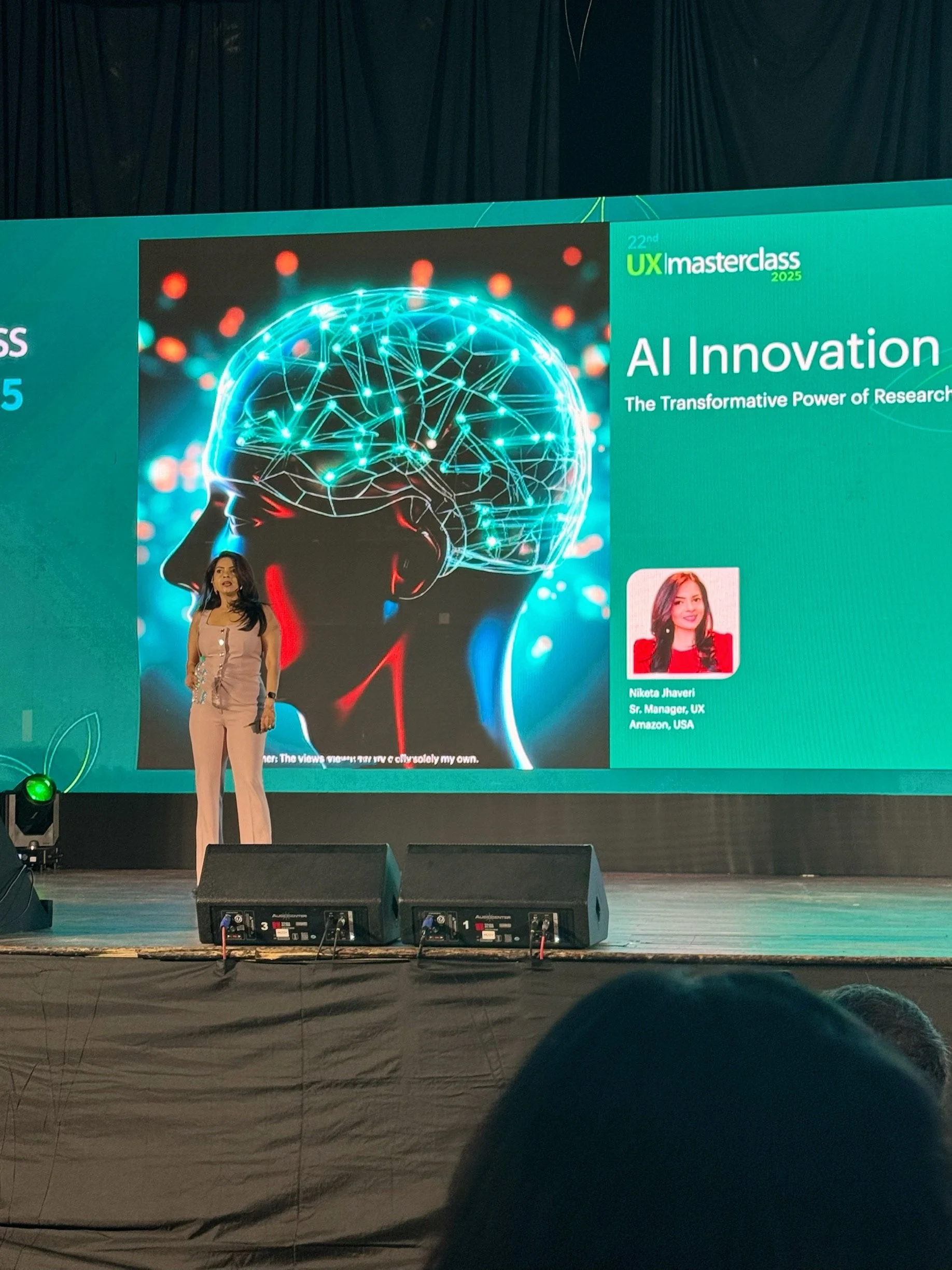
Accelerating AI Innovation at UX Masterclass
Research as the Catalyst for Global AI Innovation
Core Idea
AI is global. Human understanding is local.
As intelligent systems expand across cultures, languages, and markets, research becomes the bridge between technological capability and human reality. It reveals the invisible context behind every interaction, ensuring that innovation isn’t just faster, but more thoughtful, trustworthy, and inclusive.
Key Takeaway
The future of AI innovation won’t be defined by who builds the smartest models first.
It will belong to the organizations that understand people best, using research to transform data into insight, insight into judgment, and judgment into experiences that earn trust around the world.