


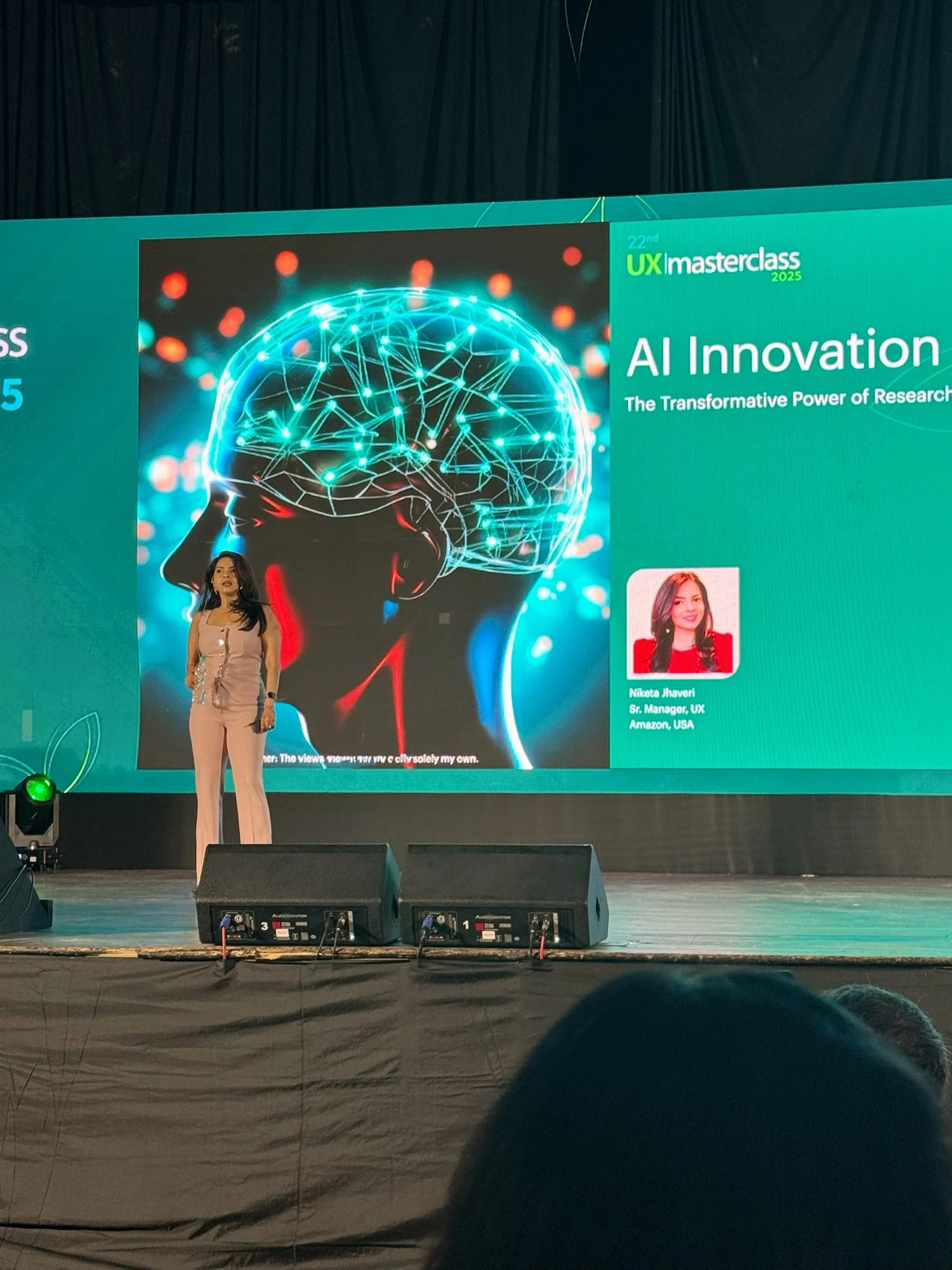
Accelerating AI Innovation
Building the Conditions for Responsible AI Adoption
- AI Adoption Strategy
- Research Enablement
At UXPA International, I explored how AI is changing the practice of research, and what leaders must build around the technology for responsible adoption to last.
Tools can accelerate individual tasks. Shared capability requires more: practical frameworks, opportunities to experiment, ongoing support, clear quality standards, and human ownership of consequential decisions.
How does an organization move from isolated AI use to a learning system that improves how people work?
Explore the Capability Journey
Access creates possibility. Enablement turns it into capability.
The people closest to a problem often understand its friction, exceptions, and consequences best. AI gives them new ways to explore solutions.
Leadership’s role is not to centralize every answer. It is to create an environment in which people can experiment responsibly, get help when needed, validate what AI produces, and turn useful practices into shared capability.
AI adoption is an organizational design challenge, not a software distribution challenge.
Giving people access to AI may create experimentation. It does not automatically create confidence, repeatability, sound judgment, or responsible scale.
Access, practice, support, integration, shared learning
- Access
Make relevant capability discoverable and reduce unnecessary friction to getting started.
- Practice
Help people apply AI to real work rather than abstract demonstrations.
- Support
Provide frameworks, examples, office hours, peer learning, and expert help.
- Integration
Bring proven practices into workflows with validation, traceability, and clear ownership.
- Shared Learning
Observe what works, surface recurring problems, improve standards, and help others progress.
The system evolves through use.
Five stages from learning to leading
-
Learning
I understand the possibilities and limitations.
Build literacy about what AI can do, where it can fail, how to verify outputs, and when human judgment is essential.
-
Applying
I can use it on a meaningful problem.
Experiment with relevant work using examples, trusted inputs, low friction tools, and appropriate boundaries.
-
Integrating
My workflow changes.
Turn a useful experiment into a repeatable practice with validation, documentation, and decision ownership.
-
Influencing
I help others use it well.
Share patterns, mistakes, and reusable approaches. Help colleagues adapt the capability rather than merely copy a technique.
-
Leading
I shape the conditions for responsible scale.
Create the support, standards, incentives, guardrails, and learning mechanisms that allow distributed practice to grow.
Each stage carries forward the capability built before it.
Maturity is not measured by how often people use AI. It is measured by whether they can apply it responsibly, improve the work, and help the surrounding system learn.
What carries people through the journey
Six components work together as one operating system that supports movement through the Capability Journey.
Reduce the effort required to begin.
Turn principles into practical choices.
Help people see what good practice looks like.
The Capability Journey
- Learning
- Applying
- Integrating
- Influencing
- Leading
Give people somewhere to work through uncertainty.
Build validation, appropriate access, traceability, and escalation into the workflow.
Observe repeated use, meaningful problems solved, workflow integration, and where people remain blocked.
What democratizing AI actually requires
A login does not create judgment or confidence.
Low friction should coexist with boundaries appropriate to the data, decision, and consequence.
A small expert team cannot solve every local problem or review every routine action.
Usage volume alone does not show that work improved.
Democratizing AI means distributing the ability to solve relevant problems while preserving support, standards, validation, and human accountability.
Three levels of human responsibility
A person reviews or approves specific outputs.
A person frames the problem, sets direction, and owns the outcome.
Leaders improve the tools, practices, guardrails, and learning environment around the work.
The most distinctive contribution of leadership.
AI + Human Research Strategist
Following the presentation, I created the AI + Human Research Strategist to help researchers reason through where AI can accelerate work, where human judgment remains essential, what must be validated, and who owns the resulting decision.
It is a learning and decision support artifact. It supports a researcher’s judgment and does not replace it.
Help me review a research workflow. Where could AI contribute, what should people verify, and which decisions require human judgment?
Four questions it helps a researcher examine- What problem are we trying to solve?
- Where could AI increase speed or reach?
- What requires human or customer validation?
- Who owns the decision and its consequences?
At UXPA International
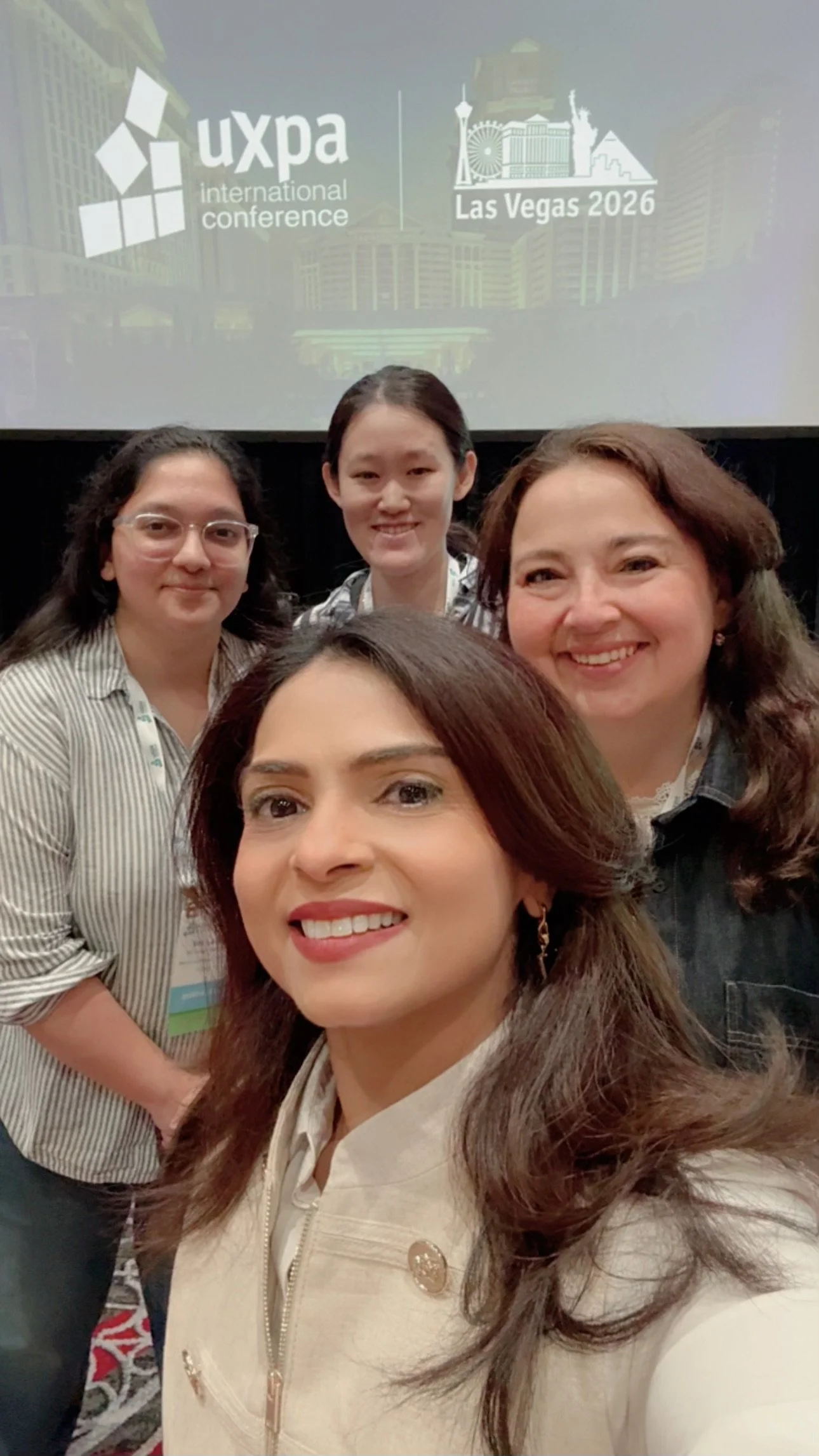
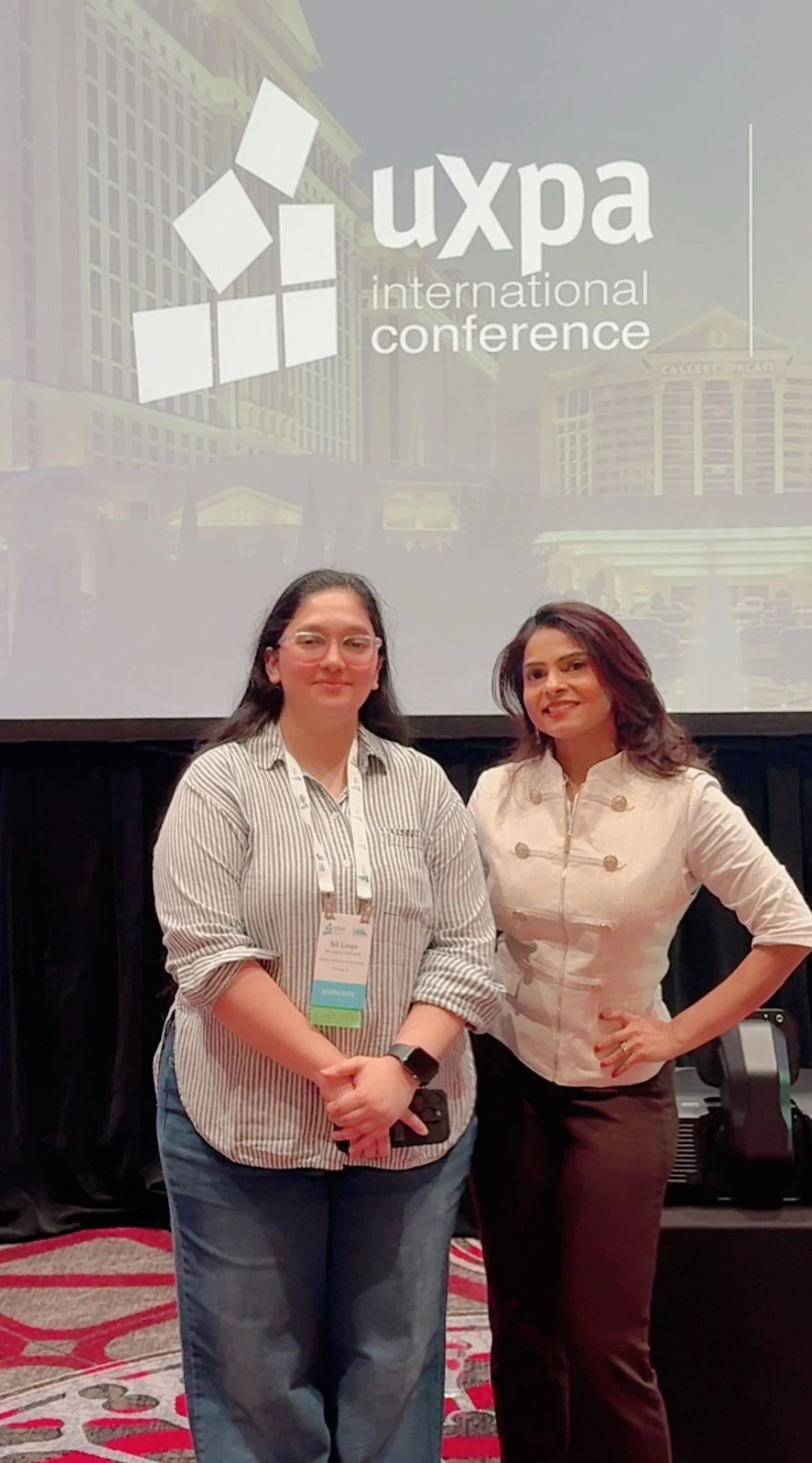
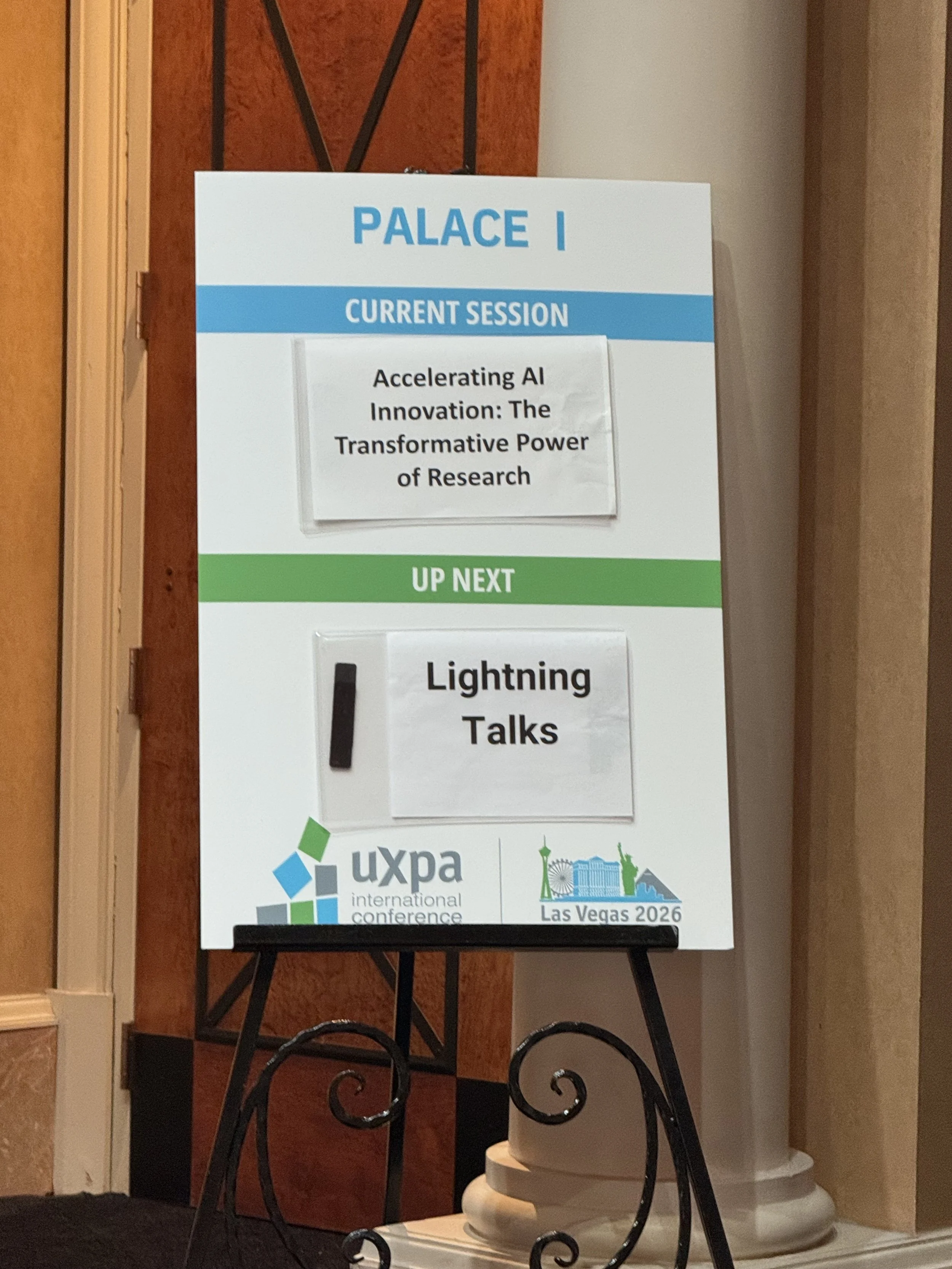


How does an organization become a learning system for AI?
The next stage of adoption is not simply more people using AI.
It is more people solving meaningful problems, examining the quality of the results, sharing what they learn, and improving the workflows and standards around them.
When tools, support, guardrails, and learning reinforce one another, individual experimentation becomes organizational capability.
Responsible AI scales when the organization learns, not merely when the technology spreads.
Capability is not measured by access alone.
Responsible AI adoption depends on what people understand, how they make decisions, and whether the surrounding system helps them retain judgment as AI takes on more of the work.
Related Echoes
How can global AI preserve local meaning?
Explore how research reveals differences in language, expectations, behavior, and trust before assumptions scale across markets.
Explore Global AI Through Local Understanding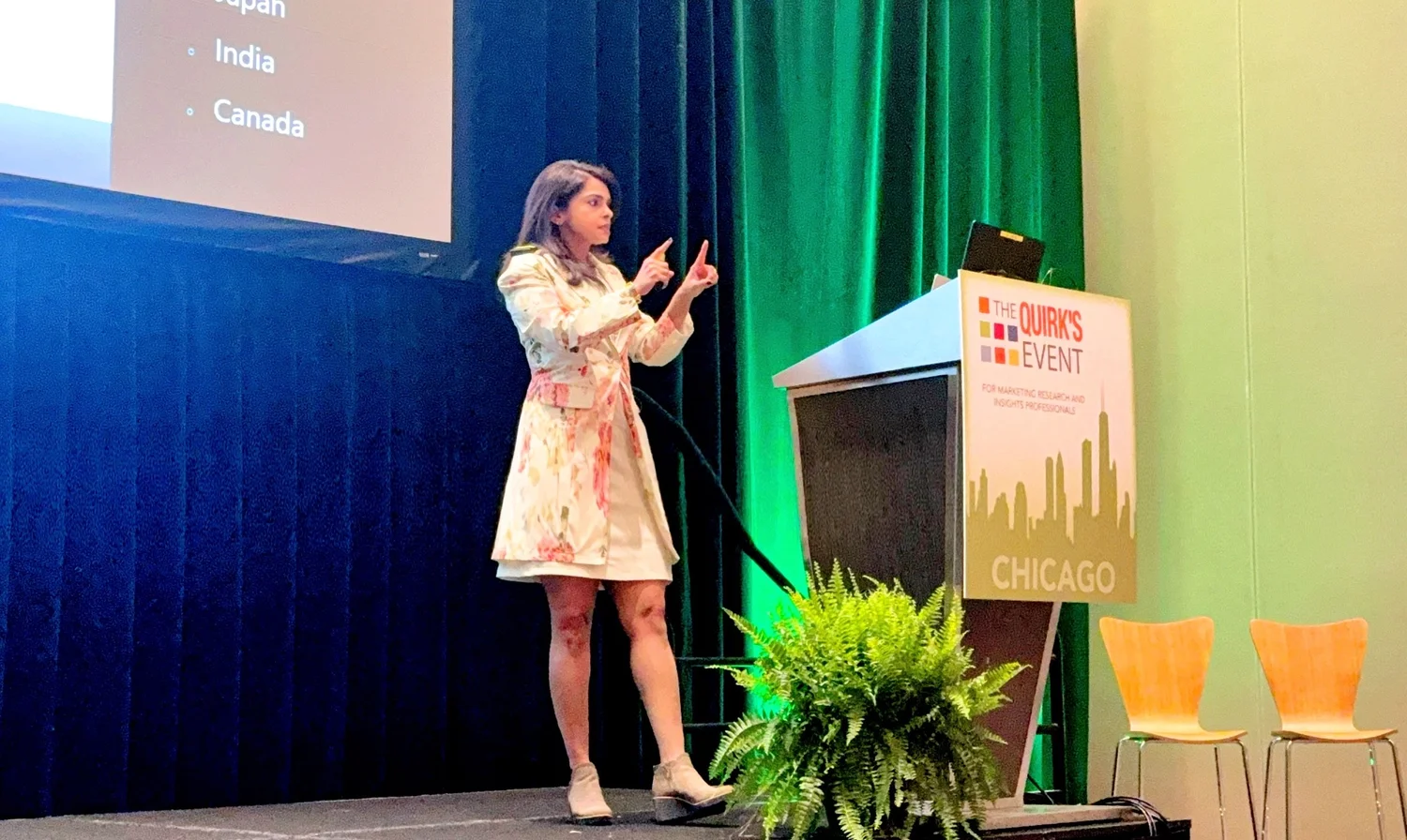
How does faster evidence produce a better decision?
Explore the path from customer evidence grounded in its sources to synthesis, interpretation, accountability, and explicit action.
Explore the Insight Value ChainContinue in Chronicles

What happens when AI improves output faster than people develop judgment?
Explore the distance between what people can produce with AI and the expertise they would once have developed through doing the work themselves.
Read The Becoming Gap
Where should AI enabled work return to human judgment?
Explore the Deliberation Horizon, the point beyond which a human question can no longer change an agent’s action, and the Return Points leaders must design before that moment.
Read Agents