

June 2026
The Future of Design Is Not AI First. It Is Judgment First.
Beyond the Demo: How AI Is Changing Real Product and Design Workflows
DDX • NYC • Jun 2026
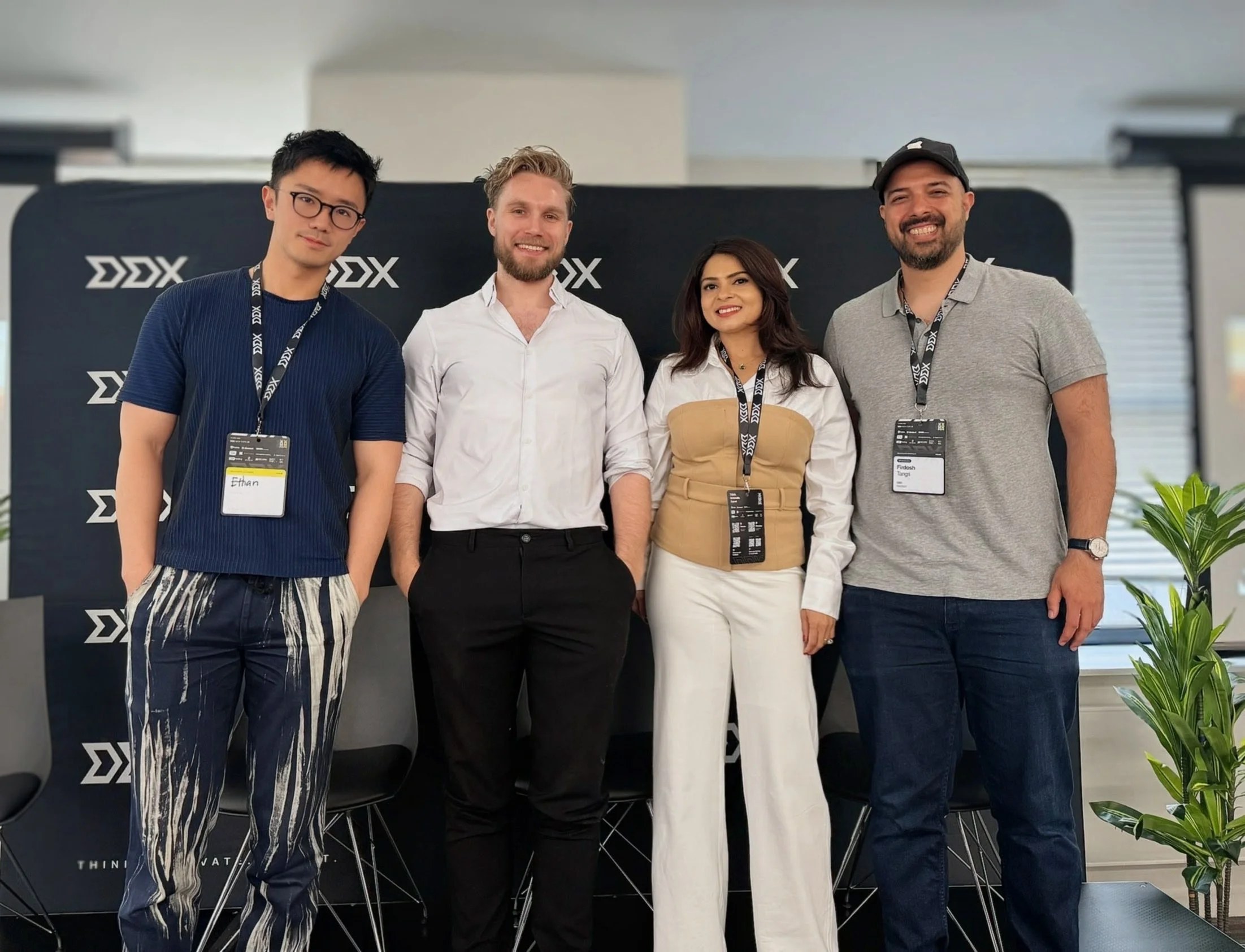
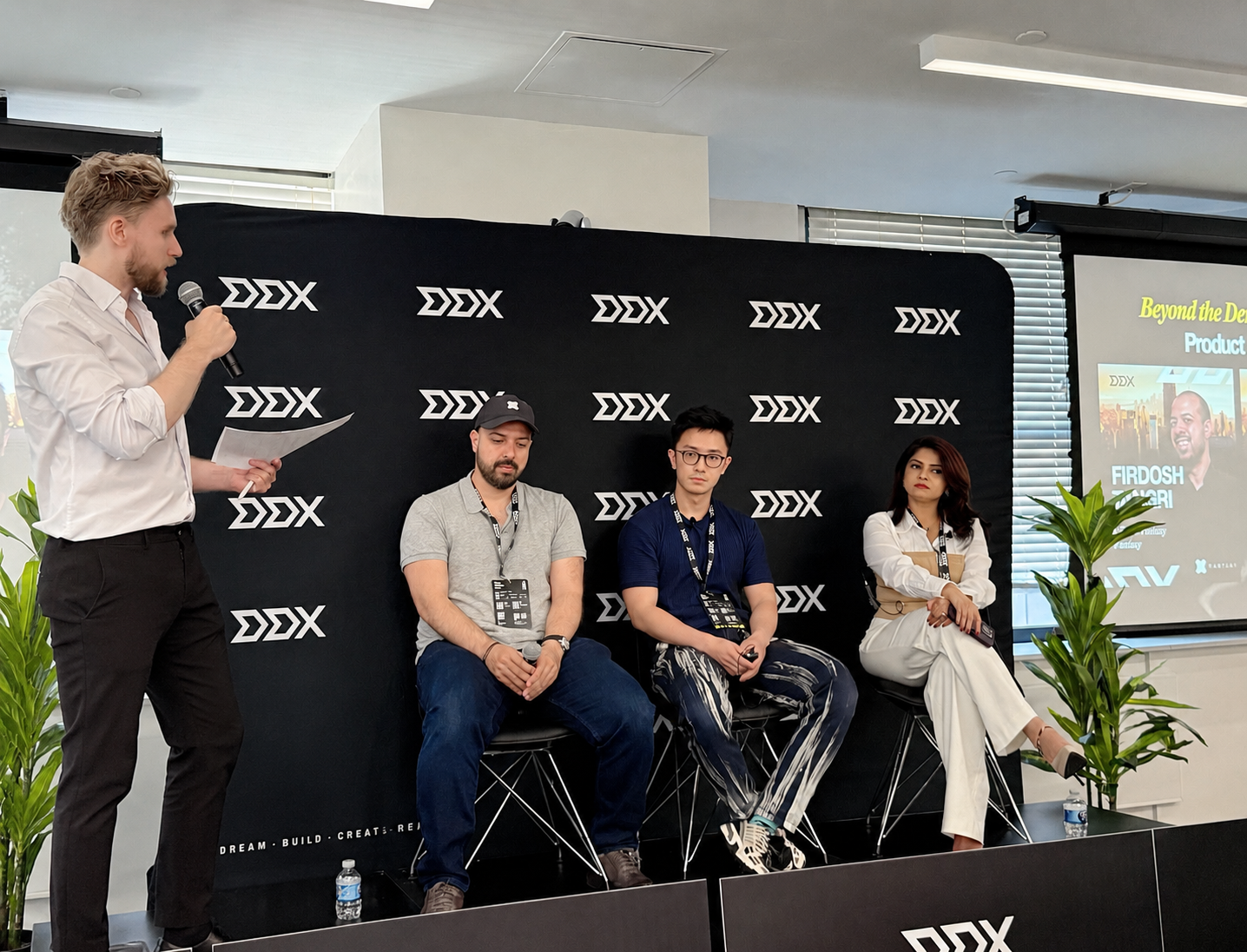
This panel was part of DDX New York. It looked at what happens when AI leaves the demo and enters real products, real workflows, and real customer experiences. Alongside design and product leaders from OpenAI and Fantasy, we explored how the craft of design is changing as AI becomes part of everyday creation, evaluation, and decision making.
Core Idea
Not everything that can be delegated should be delegated.
AI can generate, summarize, and act faster than any team. But speed is not the same as progress. As more work becomes possible to hand off, the defining question shifts. It is no longer what AI can do. It is what AI should do, and where human judgment gives the work its meaning.
The Panel
Moderator:
Sebastian Gier, Cofounder, Footprint and Host, DDX
Panelists: Firdosh Tangri, CEO, Fantasy
Niketa Jhaveri, Sr. Manager User Experience, Amazon
Ethan Ye, Member of Design Staff, OpenAI
A Framework in Evolution
Looking back, DDX New York was one of the moments where a thread running through my 2026 talks came into focus.
At Chicago UX Camp, it appeared as leadership that turns chaos into clarity. At UX Days, it became the invisible decisions inside AI. At UXPA International, it became research as the bridge between technological possibility and human outcomes. At DDX, it took the form of one principle: judgment first.
The DDX team later named this the defining signal of the entire conference. The future of design is not AI first. It is judgment first.
Key Takeaways
From Demo to Dependable
A demo can impress without being dependable. The real test of AI is whether it fits the messy reality of product work, changes how teams operate, and holds up in front of real customers.
Delegation Is a Design Decision
Every task handed to AI is a choice about what matters. Design teams need to know when AI should speed up a task and when it risks flattening the human judgment that gives the task its meaning.
Design for Humans and Agents
Firdosh Tangri described an emerging intent economy. In it, people say what they want and AI agents act on their behalf. Products will have to work for the human and the machine at the same time. That makes intent, context, trust, handoff, and recovery core design work.
From Talk to Practice
DDX captured the ideas from this panel and the full day in its conference recap, The Future of Design Is Not AI First. It Is Judgment First.
In it, they named the defining signal of the day, a principle this panel helped shape: the future of design is not AI first, it is judgment first.
Looking Ahead
The next era of AI will not be defined by what systems can do on their own. It will be defined by the decisions people make about them.
As agents begin to act on our behalf, design moves beyond screens and flows. It becomes the work of deciding what a system should understand, when it should ask permission, how it explains itself, and how it recovers when it gets things wrong.
The question I will keep exploring is simple: as AI becomes more capable, what becomes more important about being human? I believe the answer is judgment.
It is knowing what to build, what to trust, and what should stay human.