

April 2026
Design Decisions
in the Age of AI
Chicago UX Camps • Chicago
As AI transforms how products are built, the role of design leadership is changing just as rapidly. This session explored how leaders can navigate accelerating technology without losing sight of the people they serve. Through examples from healthcare, e-commerce, and global product development, the talk examined how design organizations can embrace AI while preserving human judgment, creativity, and responsibility.

Core Idea
Design leadership is no longer about managing design teams alone.
It is about guiding organizations through constant technological change while ensuring products remain deeply human.
As AI accelerates execution, leaders must spend less time directing output and more time cultivating judgment, clarity, and the environments where people and intelligent systems create better outcomes together.
A Perspective in Evolution
Looking back, this presentation captured another important thread that would later connect to my broader work on AI and human judgment.
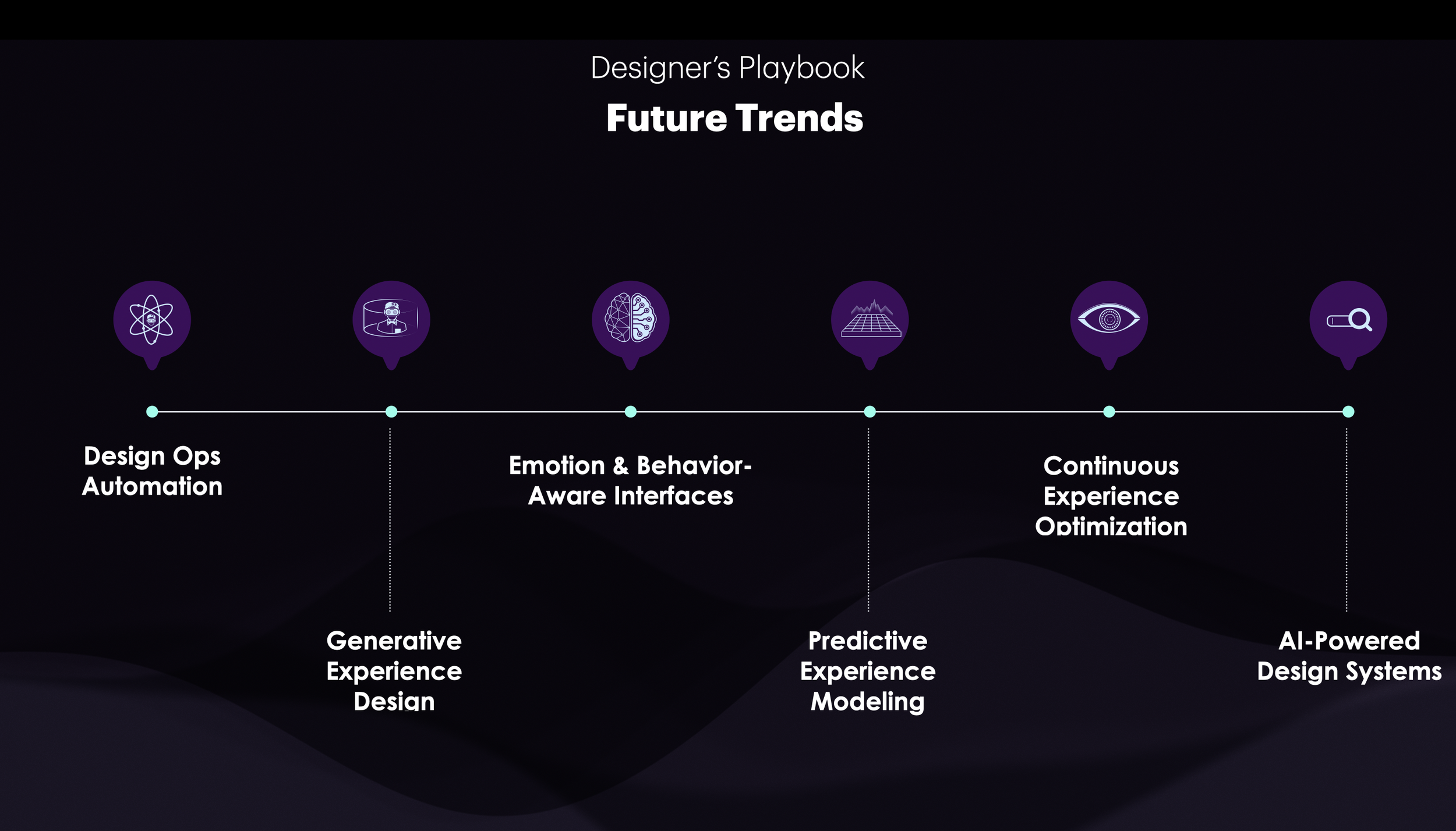
Rather than focusing only on design tools, the talk explored how leadership decisions influence every stage of product creation, from organizational priorities and research practices to customer experiences and long-term innovation.
It also introduced an early view of how design leadership must evolve as AI becomes an everyday collaborator.
Design Leadership Principles
🧭
Vision before Velocity
AI accelerates execution. Leadership determines direction.
👁
Human Judgement over Automation
Better technology increases the value of better human decisions.
🌱
Adaptive Organizations
The future belongs to organizations that learn and adapt faster than technology changes.
Key Insights
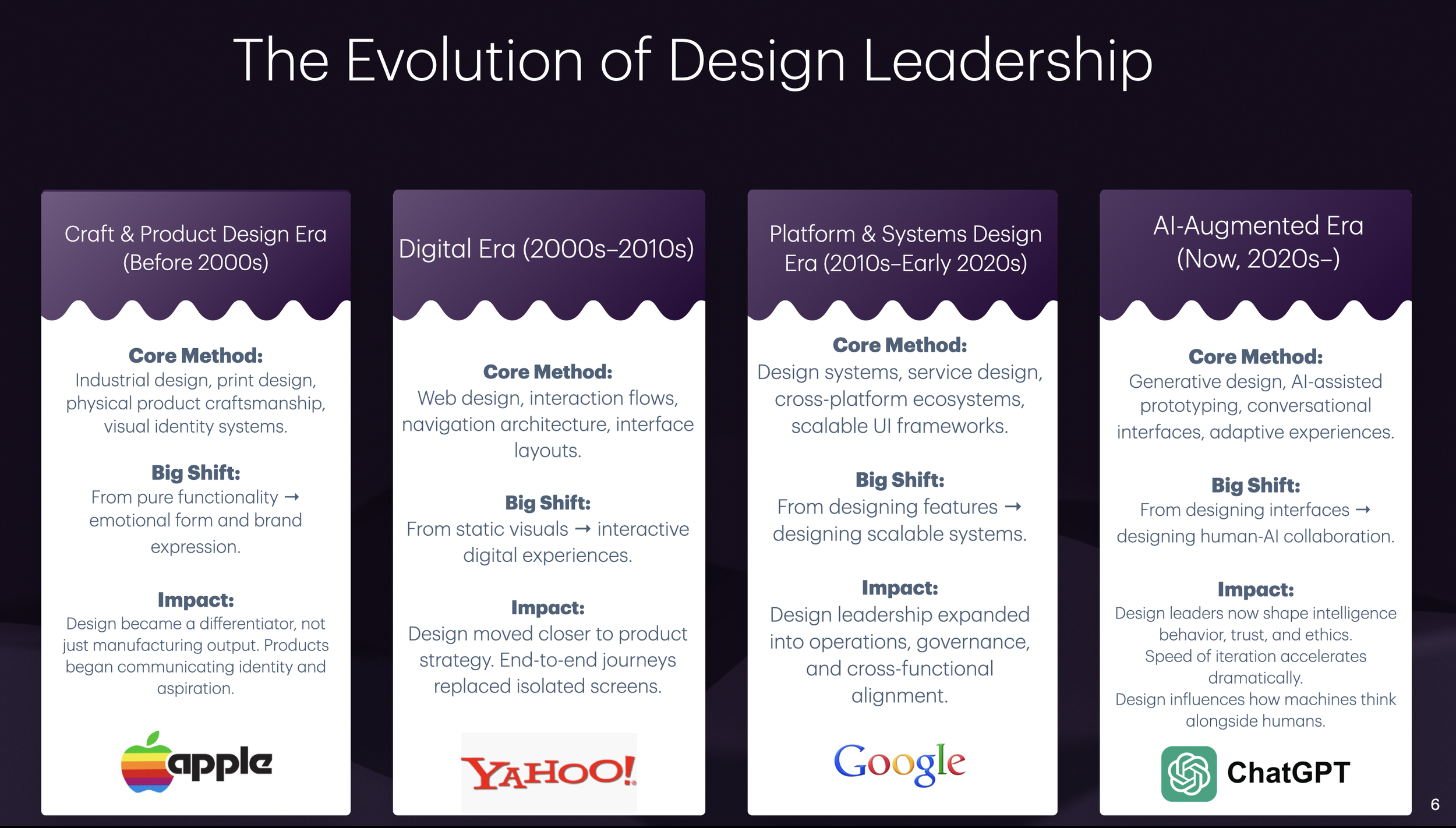
Leadership Evolves
Every technological shift changes the role of leadership. As AI takes on more execution, leaders must create direction, alignment, and trust rather than simply managing delivery.
Global Products Require Local Understanding
Building products at global scale requires balancing universal design principles with local cultures, behaviors, languages, regulations, and expectations. Great design leadership understands both.
The Future Belongs to Adaptive Teams
The strongest organizations won’t be defined by how much AI they adopt, but by how effectively designers, researchers, engineers, and AI collaborate to solve meaningful problems.
From Talk to Practice
Many of the ideas introduced in this presentation continue to influence my work across AI strategy, research, and product design.
Several themes first explored here, including human-centered leadership, AI collaboration, and the future of design organizations, later became recurring topics in my speaking, writing, and ongoing research.
Looking Ahead
This prediction from early 2026 explored how AI would reshape design organizations and the role of leadership.