


Accelerating AI Innovation
Designing Global AI Through Local Understanding
- Cultural Intelligence
- Global AI Strategy
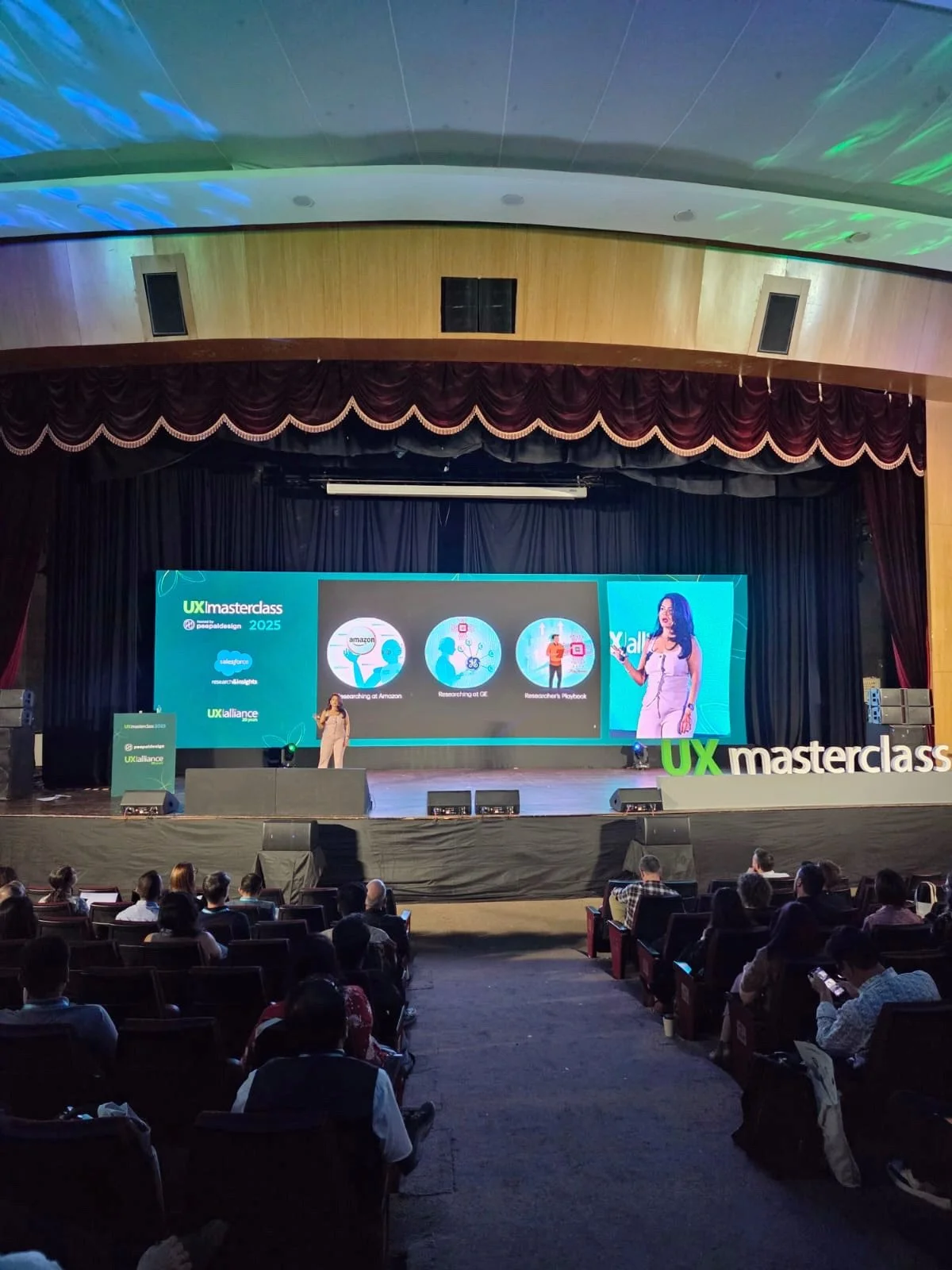
At UX Masterclass India, I explored why global AI cannot be designed through technical capability alone. The same response can carry different meanings across languages, markets, and cultural contexts.
Research helps teams distinguish what should remain globally consistent from what must adapt, and reveals the assumptions an AI experience may otherwise scale.
How can AI scale globally without flattening the differences that shape meaning and trust?
Explore the Global and Local Framework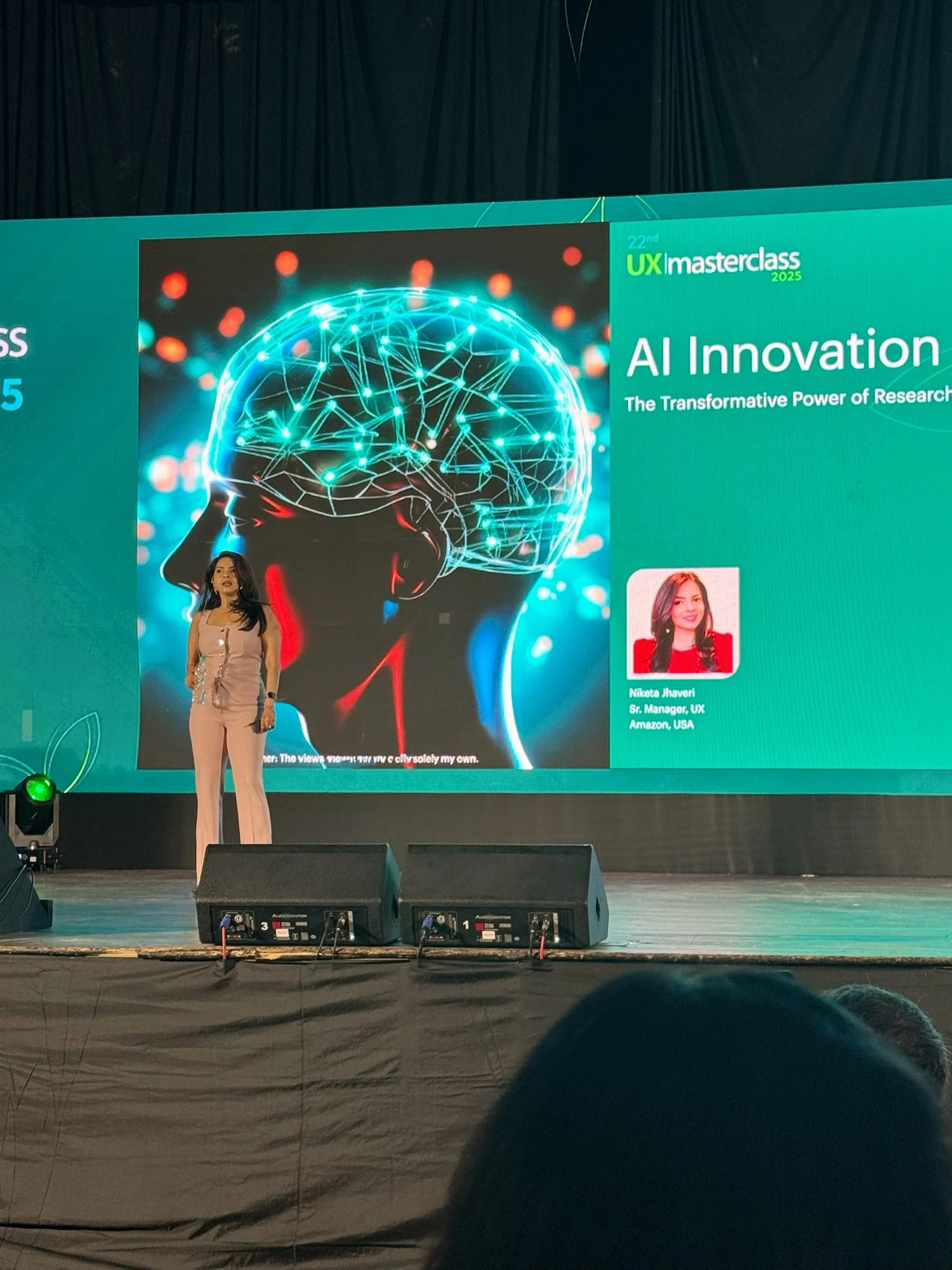
Global AI must learn where sameness stops being useful.
A shared system may need common principles, but people do not experience technology in a cultural vacuum.
Language, expectations, social norms, local conditions, and prior experiences shape what people understand, whether they trust the response, and what they do next.
Research makes those differences visible before a global pattern becomes a global mistake.
What are people saying and doing?
Gather language, behavior, expectations, workarounds, and trust signals within the local context.
What does it mean here?
Interpret why a pattern exists and whether similar words or actions carry different meanings across markets.
What should remain consistent, and what should change?
Translate the evidence into a global principle, a local variation, or a question that still requires investigation.
Learning continues as people encounter the experience
Two questions, one decision.
What should travel?
- Core customer promise
- Safety and quality principles
- Essential interaction logic
- Shared measures of value
Global principle, locally meaningful experience
What must adapt?
- Language and expression
- Trust signals
- Local practices
- Customer expectations
- Market specific priorities
The goal is not to produce a different product for every market or force every market into the same pattern. The goal is to make the global principle explicit while preserving the differences that affect meaning, trust, and use.
Three questions before global AI scales
What are we assuming will travel?
Identify which behaviors, meanings, and expectations are being treated as universal.
What difference could change the experience?
Look for local conditions that affect interpretation, trust, usefulness, or harm.
Who can challenge the global pattern?
Give people with local knowledge a meaningful role in questioning evidence and shaping adaptation.
Global technology succeeds through local understanding.
The same experience can be interpreted differently across markets. Research helps teams discover where adaptation matters.
Language and intent
What does this person mean in this situation, not merely what did they say?
Trust and expectations
What would make the response credible and appropriate here?
Observed behavior
What do people try, repeat, question, or avoid when the experience is unfamiliar?
Local conditions
Which practices, constraints, and regional requirements should influence the experience?
The conversation in India
Presenting in India reinforced a lesson that continues to shape my work: AI may scale globally, but meaning is created locally.
Understanding how people communicate, establish trust, and make decisions changes what we ask of the technology, and who needs a voice in shaping it.
Onstage and around the conversation


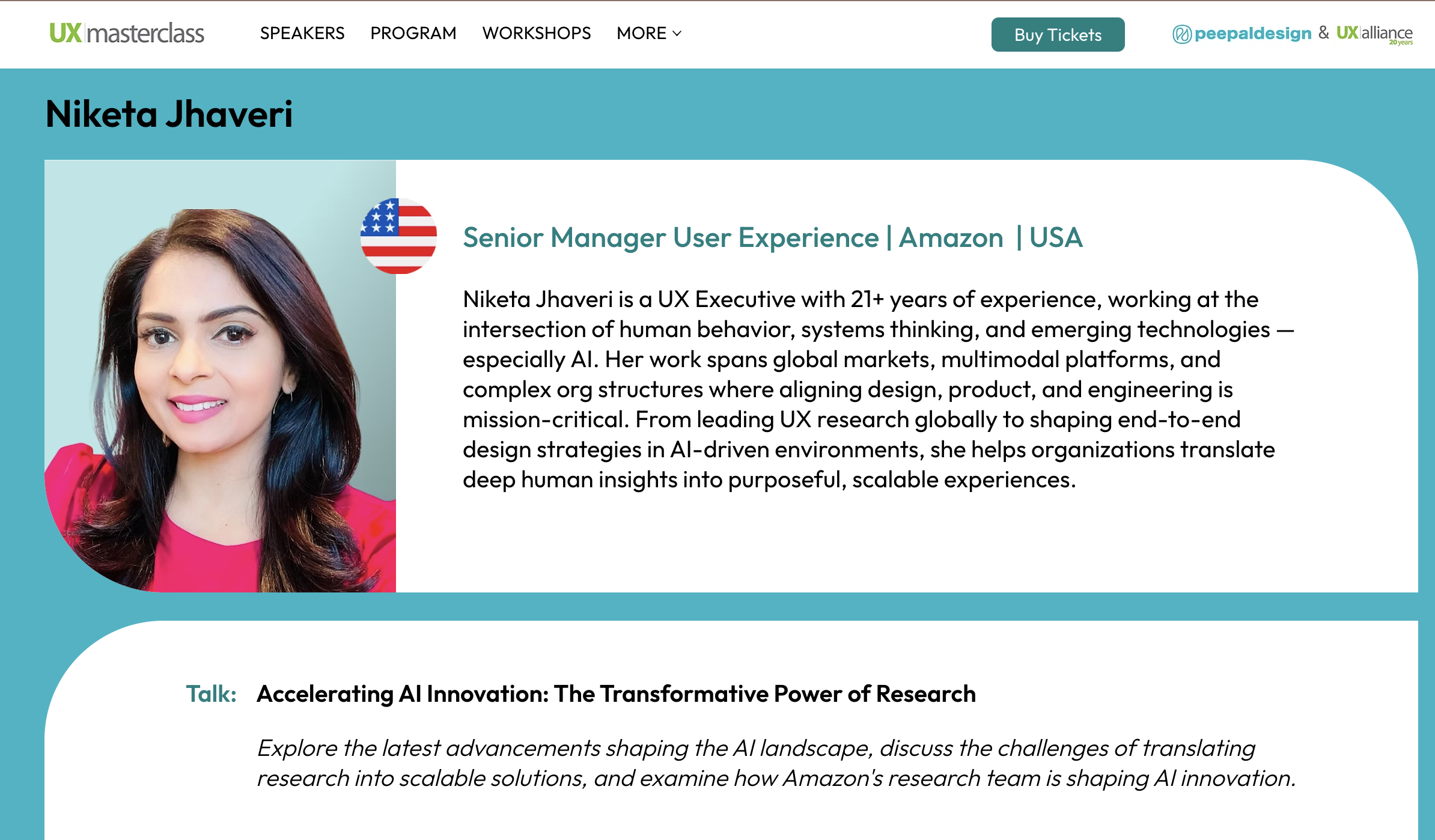
Official speaker announcement · 2025
Click any photo to enlarge
From global scale to local relevance
-
See the difference
Find where markets diverge in meaning, behavior, and trust.
-
Interpret the difference
Understand why it matters in the customer’s context.
-
Make the choice
Decide what remains global, what adapts locally, and what requires continued learning.
Scale should distribute capability without erasing difference.
Can an AI experience recognize when context changes the answer?
The next challenge is not simply making AI available in more countries or languages. It is helping AI systems respond to the contexts in which people interpret and use them.
Research gives teams a way to detect context errors, question universal assumptions, and design experiences that remain coherent globally without becoming culturally indifferent.
From understanding context to shaping what AI becomes.
Global AI depends on more than reach. Continue into the decisions that turn evidence into action and the organizational capability required to scale responsible practice.
Related Echoes
How does faster evidence produce a better decision?
Explore how AI can accelerate access and synthesis while researchers preserve sources, interpret uncertainty, and make decision ownership explicit.
Explore the Insight Value Chain
How does responsible AI practice scale?
Explore how teams move from individual experimentation to shared capability through frameworks, support, embedded guardrails, and organizational learning.
Explore the AI Capability JourneyContinue in Chronicles
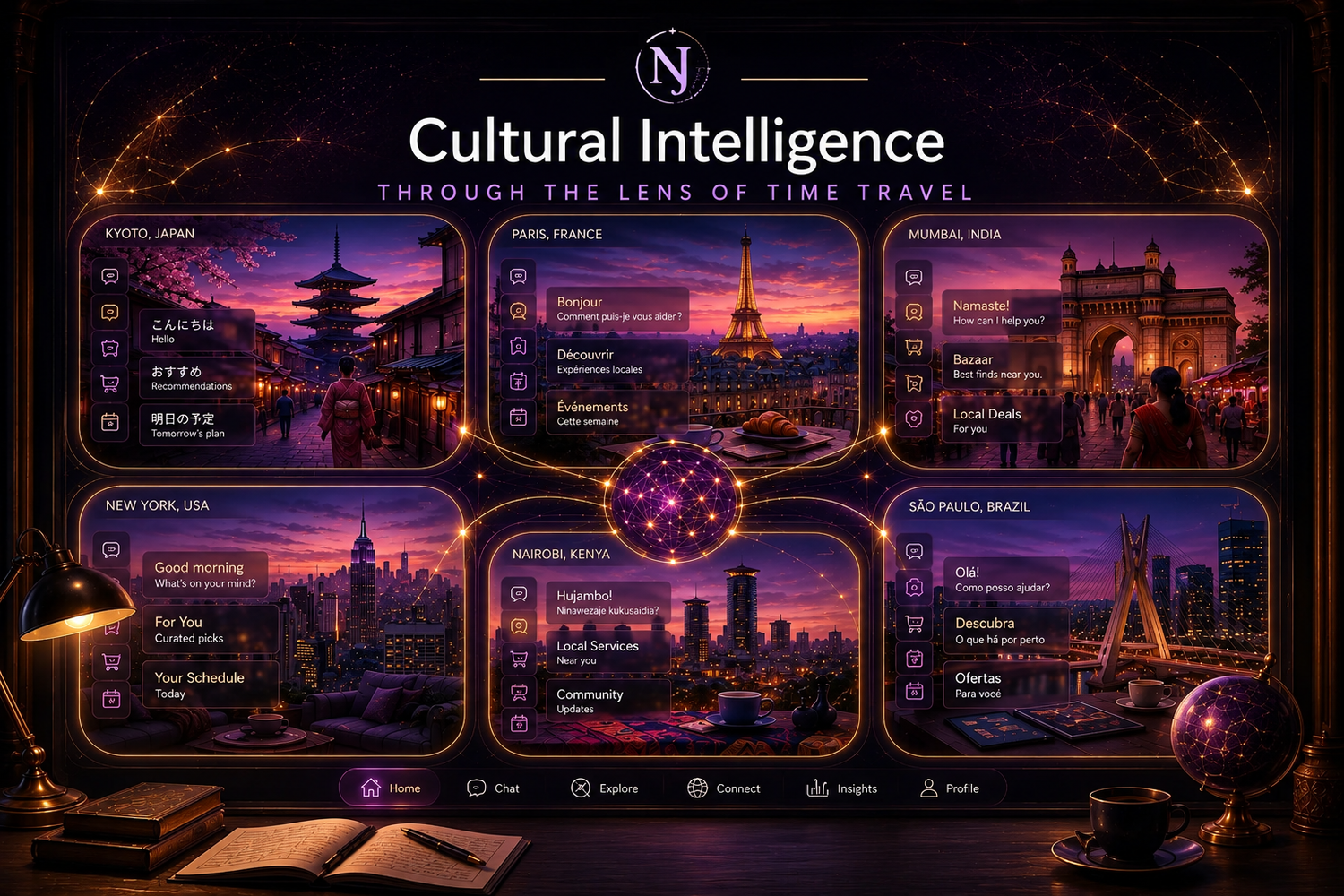
Can one AI understand multiple ways of thinking?
Explore why accuracy alone is insufficient for global AI, and what systems must understand about communication, trust, decisions, and local context.
Read Cultural Intelligence
Which assumptions are already shaping the experience?
Explore the upstream research, design, and leadership choices that determine who is represented, what gets built, and which perspective defines “normal.”
Read Invisible Decisions