

The Untraveled Mind
Artificial intelligence can hold every map humanity has ever drawn, yet it has walked none of the roads. This essay is about the difference between the map and the miles, a difference I learned inside a mapping company, and why it decides what AI can and cannot understand.
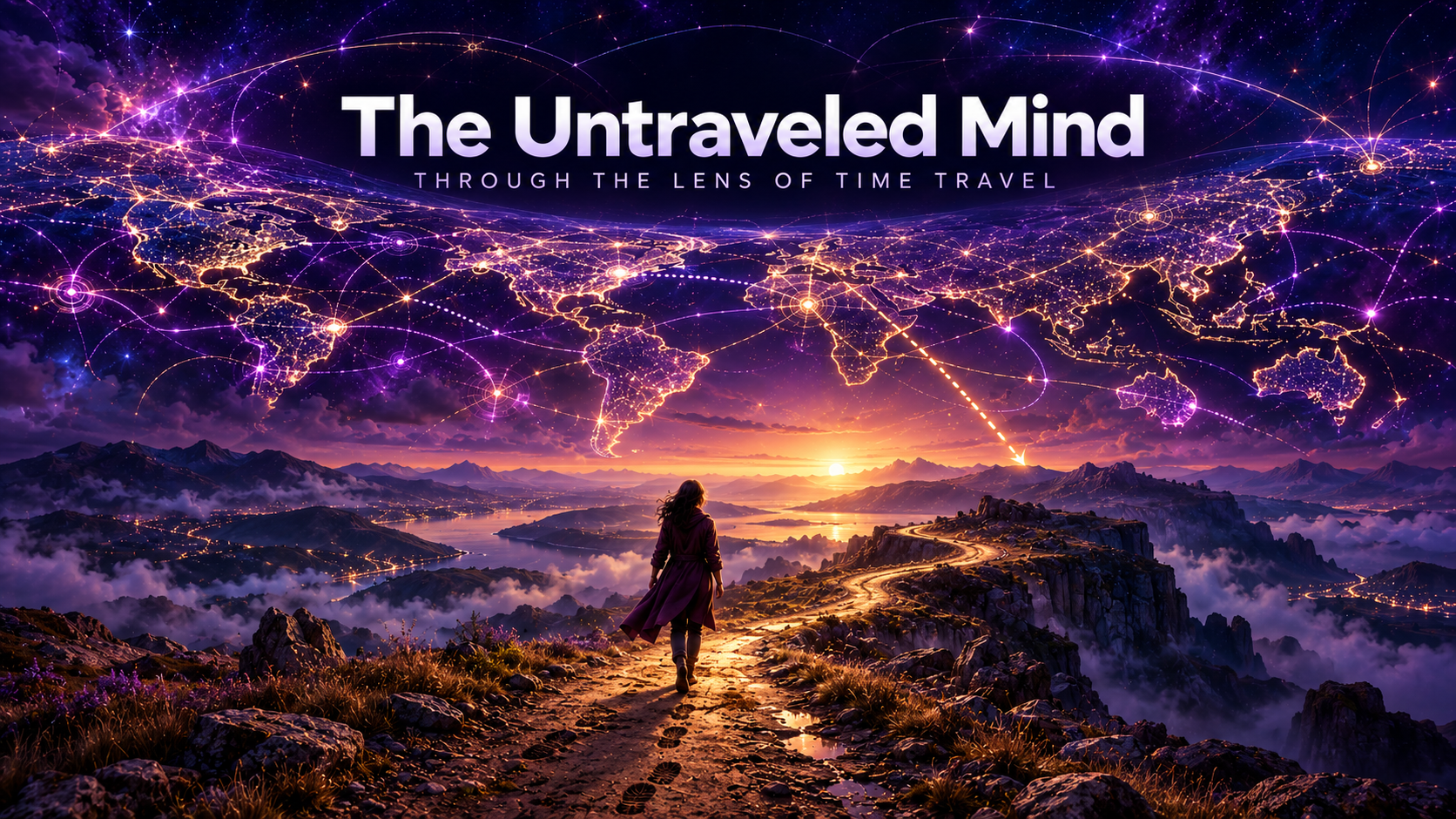
The Untraveled Mind Through the Lens of Time Travel by Niketa Jhaveri
Every map was once a journey
Every map you have ever used was once a journey. Before a road became a line on a screen, someone drove it. Before a coastline became a smooth blue edge, someone sailed it and came back to draw what they had seen. A map is the quiet record of travel that already happened, flattened so that the rest of us can find our way without making the trip ourselves. That is the gift of a map, and it is also the thing we forget. We hold the finished picture and lose sight of the miles that made it.
What a map leaves out
A map is generous with width and silent about depth. It shows you every street at once, the whole city spread flat in your hand, and it says nothing about what it felt like to walk any of them. It cannot tell you which corner is dangerous after dark, which hill steals your breath, which turn is beautiful in a way no symbol can hold. The map gives you reach. The walking gives you knowing. They are not the same thing, and the gap between them is the subject of this essay.
Three years inside the map
For three years I led the global e-commerce experience at HERE Technologies, one of the companies whose maps sit inside the cars people drive every day. My work lived at the exact point where a map met the person who needed it. And the thing that business taught me, over and over, was simple and a little humbling. People paid to update their maps because roads change. A new exit opens. A street turns one way. A bridge closes for a year. The map that was flawless in 2015 will, in time, drive you straight into a wall.
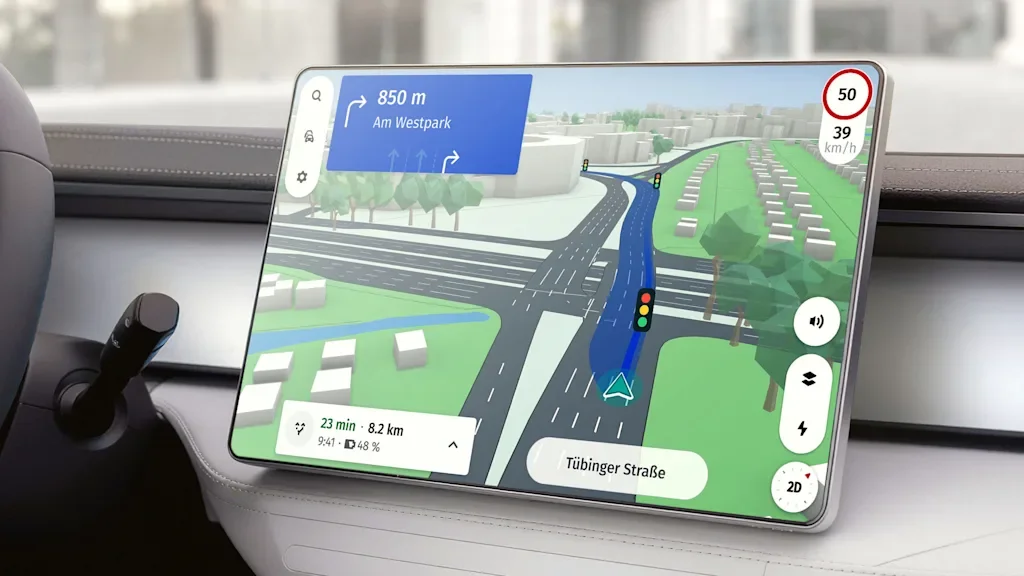
A map is only as true as the last drive
So here is the lesson I carried out of those years. A map is only as true as the last time someone drove that road. The driving is what keeps it honest. The map cannot refresh itself, cannot feel the new one way street, cannot notice that the bridge is gone. It stays confident and detailed while the world quietly moves underneath it. Only the miles keep it true, and the miles have to be traveled again and again by someone actually on the road.
Width is what AI has
This is where artificial intelligence enters the story, because AI is the widest map ever made. It has read more accounts of human experience than any person could absorb in a thousand lifetimes. Ask it about grief in Lagos, harvest festivals in Punjab, the physics of a collapsing star, and it will answer with a fluency that feels like understanding. That fluency is real, and it is extraordinary. It is also width. It is the whole map, held at once, in a single mind.
Depth is what AI lacks
What AI does not have is a single mile of its own. It has never been lost. It has never changed its mind halfway down a road because the road surprised it. It has read every account of a first heartbreak and lived through none of them. This is not a flaw to be patched in the next release. It is the nature of a thing that is all map and no journey. The untraveled mind holds the entire picture and has stood in none of it.
The map is not the journey
There is an old idea that the map is not the territory, a caution against mistaking our descriptions for the real thing. It is true, and it is not quite enough here. The deeper point is that the map is not the journey either. Even a perfect map, flawless and fully current, is not the walking that made it. AI can be given the freshest map in the world and still have traveled nothing. Its limit is not old information. Its limit is that it has no miles at all.
It goes stale in the present
Watch how this plays out right now. A system personalizes for you by knowing your last click, your last purchase, your last search, the freshest possible snapshot of where you stand. What it does not know is the road that brought you here, the arc of becoming that a single click cannot hold. I have written before about personalizing across a life rather than a moment, and about the becoming gap between who you were and who you are turning into. The untraveled mind reads your position on the map. It was never on the road with you.
It goes stale in the past
It fails looking backward too. Culture is not a dictionary of words, it is centuries of walking. When a system reads the words and misses the miles behind them, it produces answers that are correct on the surface and hollow underneath, the right translation of a phrase whose weight it cannot feel. A map of a culture is not the journey of living inside one. The reach is there. The depth is missing, and the missing depth is exactly where meaning lives.
It goes stale at speed
And it fails fastest when we move fast. A stale map driven slowly still gets you close. A stale map driven at speed drives you into the wall before you can react. As we hand more decisions to systems that act in seconds, we are driving an untraveled mind faster and faster down roads it has never checked. I have called this deliberation debt, the cost of skipping the pause. The faster the map moves, the more the missing miles matter.
Ground truth
In mapping there is a phrase for the fix, ground truth, the practice of sending someone out to the actual road to confirm what the map claims. It is slow, expensive, and the only thing that keeps a map honest. Human judgment is the ground truth for an untraveled mind. We are the ones who have driven the road, who can stand on the corner and say the map is wrong now, the world has moved. That is not a nostalgic role. It is the one everything else rests on.
The reader's instrument
So carry a small instrument into every encounter with these systems, three quiet questions. What did this answer inherit, and from whose journey? What is it flattening into a line that was once a road someone walked? And what will it cost if I drive this map at speed without checking the ground? Those questions do not slow you down so much as keep you honest, the way a good navigator keeps a good map honest.
The miles have an older name
Every map you have ever used was once a journey, and that is the whole of it. AI can hold every map we have ever drawn. What it cannot do is travel, and what we gather on the road has an older name, one worth its own telling.
Niketa Jhaveri writes on the evolution of intelligence, human judgment and cultural context in AI and through the lens of time travel. She is the founder of Nivan, an Innovation conference bringing together leaders across AI, technology, design, research and innovation. Reach her at connect@niketajhaveri.com