

The Missing Layer in Global AI: Cultural Intelligence
Why the future of AI isn't about bigger models. It's about better understanding people.
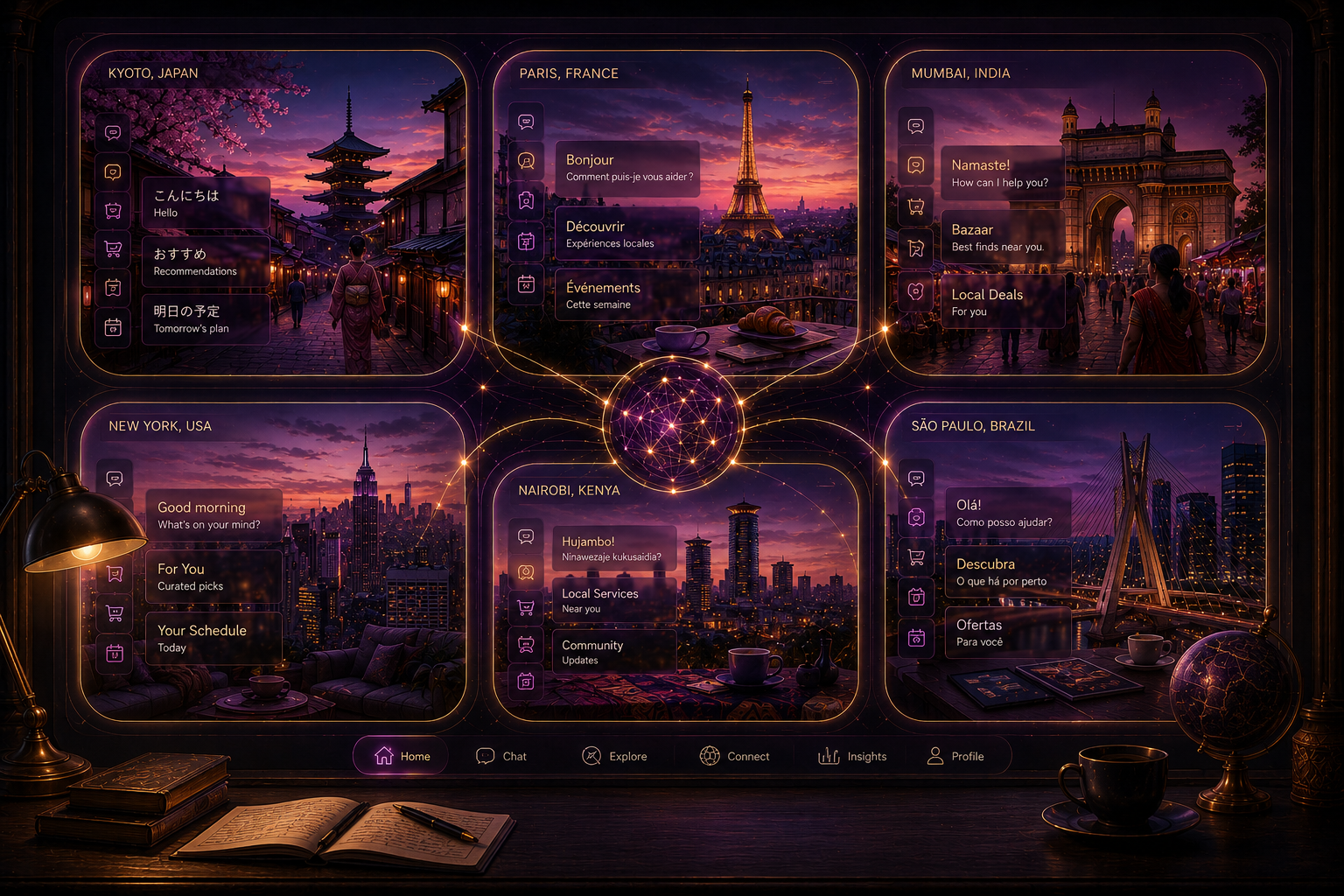
One AI. Multiple ways of thinking.
We're Optimizing the Wrong Thing
Every few months, a new AI model sets another benchmark. We compare reasoning ability, context windows, hallucination rates, latency, and accuracy. These advances are important, but they focus on how well the model performs rather than how well people experience it. Customers do not interact with benchmark scores. They interact with conversations. An answer can be technically correct yet still fail because it feels unnatural, assumes the wrong context, or leaves the customer unsure what to do next. As AI becomes a global product, success will depend on more than accuracy.
The Missing Layer: Cultural Intelligence
Cultural Intelligence is the ability for AI to understand how people communicate, build trust, make decisions, and interpret information in different parts of the world. It goes far beyond translation or localization. A culturally intelligent AI adapts its communication style, recommendations, examples, and assumptions to fit the customer's market while preserving the intent of the response. It recognizes that the same answer may need to be delivered differently in Brazil than in Japan, Germany, or the United States because people experience information differently.
A Shopping Example
Imagine asking an AI, "What's a good Father's Day gift?" A generic AI might recommend products that are popular in the United States without considering where the customer lives. A culturally intelligent AI first recognizes that the customer is in Brazil. It recommends products available in the Brazilian marketplace, uses Brazilian Real (BRL), accounts for Brazil's Father's Day in August, and avoids suggesting products that cannot be purchased locally. The customer's question is identical, but the experience is significantly more useful because it reflects the local market.
The Question We Should Be Asking
Most AI systems evaluate responses by asking, "Is this response correct?" While accuracy is essential, it is only one part of a successful customer experience. A better question is, "Would a person in this market trust, understand, and confidently act on this response?" This shifts the focus from measuring model performance to measuring customer outcomes. The goal is not simply to generate answers, but to help people make better decisions in a way that feels natural and trustworthy.
From Accuracy to Customer Experience
Evaluating AI through a UX lens requires looking beyond factual correctness. Every response should be assessed across six dimensions: Human Understanding, Cultural Intelligence, Trust, Decision Support, Local Relevance, and Emotional Intelligence. Together, these dimensions determine whether a customer can easily understand the response, whether it feels appropriate for their market, whether it builds credibility, and whether it enables confident action. An AI response succeeds only when these dimensions work together to create a complete customer experience.
Turning UX Research Into AI Behavior
Organizations have spent years conducting customer interviews, usability studies, surveys, diary studies, and market research. Too often, those insights remain in presentations and reports after the project ends. Instead, this research should become part of a centralized Knowledge Hub that continuously informs AI evaluation. Every validated finding becomes another piece of evidence the AI can use to determine whether a response matches real customer behavior. Rather than relying solely on model reasoning, AI begins making decisions based on accumulated human understanding.
The Future of Global AI
The next generation of AI will not be defined solely by larger models or higher benchmark scores. It will be defined by systems that understand people as well as they understand information. The organizations that lead will combine technical intelligence with behavioral science, UX research, and Cultural Intelligence to create experiences that feel local, trustworthy, and genuinely helpful. We have spent years teaching AI to understand language. The next challenge is teaching AI to understand humans.